WeweBlogsSlider-02

Latest Blogs

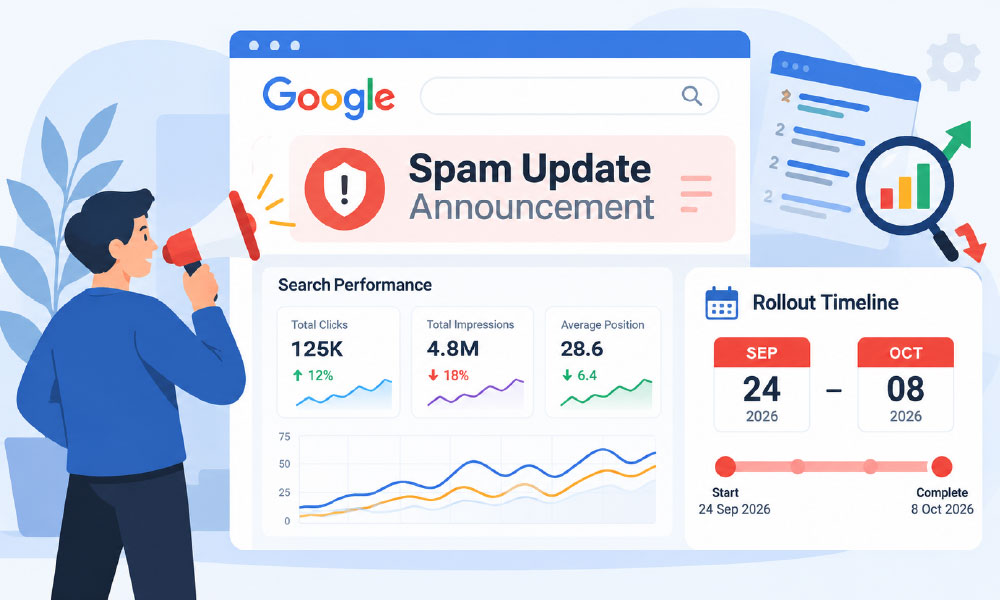
Google September 2026 spam update timeline showing search rankings and SEO performance indicators.

Google Spam Update 2026: What Changed and What Marketers Should Do

Google’s September 2026 spam update has officially finished rolling out. But what does it mean for your website’s rankings, organic traffic, and SEO strategy? If your website experienced unexpected ranking changes in late September or early October, Google’s latest spam update may be worth investigating. The update began on 24 September 2026 and ended on 8 October 2026, rolling out globally in nearly two weeks across all languages. For businesses that depend on Google Search to attract potential customers, algorithm updates can raise important questions. Has your website lost visibility? Should you update your content? Could your SEO practices be affecting your rankings? Before making changes, it’s important to understand what Google has actually confirmed. The key takeaway: A ranking drop does not automatically mean your website has been penalised. The right response is to investigate your data, review your SEO practices, and make improvements based on evidence. Google’s September 2026 Spam Update: What Happened? Google regularly improves its search systems to identify websites and content that violate its spam policies. These improvements are intended to reduce manipulative practices and maintain the usefulness of search results. According to the Google Search Status Dashboard, the September 2026 spam update: Started: 24 September 2026 Completed: 8 October 2026 Rollout duration: 13 days and 16 hours Coverage: Global, across all languages Update type: Spam update Unlike a broad core update, which involves changes to Google’s core ranking systems, a spam update focuses on improvements to automated spam-detection systems. Google has not publicly specified which particular spam tactics were targeted by the September rollout. This means businesses should avoid assuming that the update specifically targeted AI-generated content, particular industries, or certain website types. Why does this matter for businesses? Organic search visibility can influence how easily potential customers discover your website. If an important product page or service page loses visibility, it may receive fewer visits from people searching for relevant solutions. However, search performance is affected by multiple factors. A change in rankings during an algorithm update does not, by itself, establish that the update caused the change. Business takeaway: Understand the confirmed facts before deciding whether your website needs corrective action. Did Google’s Spam Update Affect Your Website? If you noticed changes in search rankings or organic traffic between 24 September and 8 October, the update is one possible factor to investigate. However, not every ranking fluctuation indicates a spam-policy violation. Website performance may also change because of: Seasonal changes in search demand Competitors improving their content or websites Changes in how users search Technical website or indexing issues Changes to website content or structure Reporting differences between SEO tools During the September rollout, SEO monitor also reported unusual fluctuations in third-party ranking trackers. Its analysis suggested that some automated searches returned incomplete or inaccurate results, creating ranking reports that did not consistently reflect what users saw in Google Search. This highlights an important point for marketers. A sudden ranking drop in an SEO tool is not always the same as a confirmed decline in organic search performance. Example: An SME Notices a Ranking Drop Imagine a Malaysian SME that relies on Google Search to attract customers to its website. Its weekly SEO report shows that several important keywords dropped significantly at the end of September. The marketing team becomes concerned and considers rewriting its website content. However, when the team checks Google Search Console, organic clicks and impressions remain relatively stable. In this situation, the ranking report alone may not justify major content changes. The business should continue monitoring performance and investigate whether the reported movement reflects an actual change in search visibility. Business takeaway: Verify ranking changes using reliable performance data before making significant website changes. How to Check Your SEO Performance After the Update For businesses concerned about Google’s September spam update, a structured SEO performance review is a useful starting point. Here are five practical steps. Step 1: Review Google Search Console Start by examining your website’s performance in Google Search Console Focus on four key metrics: Metric What It Tells You Total clicks How many times users clicked through to your website from Google Search Total impressions How often your website appeared in Google Search results Average CTR The percentage of impressions that resulted in clicks Average position Your website’s average ranking position across reported search appearances Table 1: Review Google Search Console Compare performance before, during, and after the rollout. For example, you can examine: Before: 10–23 September 2026 During: 24 September–8 October 2026 After: 9–22 October 2026 These periods can provide an initial comparison, although differences in weekday patterns, search demand, and other factors should also be considered. Look for sustained changes rather than reacting to a single day of unusual results. Step 2: Identify Which Pages Were Affected If organic traffic declined, determine whether the change affected your entire website or only specific pages. For example: Did your homepage lose visibility? Were particular service pages affected? Did several blog articles experience lower impressions? Were changes concentrated around certain keywords? This helps narrow the investigation. A decline affecting one page may require a different response from a site-wide performance change. Step 3: Check Your Search Queries Review the keywords and search queries that previously generated impressions and clicks. Look for changes in: Branded versus non-branded searches Informational versus commercial queries High-value service keywords Geographic search terms Queries associated with affected pages For SMEs, this is particularly important because not all traffic has the same business value. A decline in visitors to a general informational article may have different implications from a decline in searches for a core service. Step 4: Investigate Technical Issues Before attributing a decline to Google’s spam update, check whether technical issues may have affected your website. These can include: Pages unintentionally blocked from indexing Incorrect canonical tags Website migration or URL changes Broken internal links Server errors Changes to important page content Google Search Console’s indexing reports can help identify certain technical problems. Step 5: Monitor Performance Over Time Avoid making
SME business owner collaborating with freelance digital professionals through WeWe Talent Marketplace.

How SMEs Can Access Tech Expertise Without Building a Large In-House Team

Small and medium-sized enterprises (SMEs) often need digital expertise to build websites, improve customer experiences, manage digital marketing, and develop new business capabilities. But hiring a full-time specialist for every digital function may not be practical. The good news? SMEs don’t need a large in-house technology team to move digital projects forward. By working with freelancers, external specialists, and project management service providers, businesses can access relevant expertise based on their project requirements, budget, and timeline. The key is knowing which skills are needed, when to bring in external support, and how to manage the work effectively. 1. Why SMEs Need Flexible Access to Digital Skills Digital projects often require different types of expertise at different stages. For example, launching a new business website may involve a UI/UX designer, web developer, content writer, and SEO specialist. Once the website is live, the business may need occasional technical updates and ongoing marketing support rather than the same full team every day. Maintaining permanent roles for all these functions can create additional recruitment, management and staffing commitments. A flexible talent model allows SMEs to engage specialists for specific needs while keeping their internal teams focused on core business activities. 2. Three Ways to Access Tech Expertise Without Expanding Your Team Option 1: Hire freelancers for specific projects Freelancers can be useful when a business has a clearly defined task, such as redesigning a landing page, developing a website feature or preparing marketing content. This approach is particularly suitable when an internal team member can oversee the project and review deliverables. Option 2: Work with external specialists on a recurring basis Some SMEs need expertise regularly but not necessarily on a full-time basis. For example, a business might engage an SEO specialist for recurring optimisation work or a designer for monthly marketing campaigns. Recurring arrangements can provide continuity without automatically requiring a permanent position. Option 3: Use a managed project service When a project involves multiple specialists, coordinating tasks, timelines and deliverables can become challenging. A managed project service can help organise talent sourcing, project coordination and delivery oversight. This approach may suit SMEs that have clear business goals but limited internal resources to manage the entire project. 3. Freelancers vs. In-House Teams vs. Managed Projects Table 1: Freelancers vs. In-House Teams vs. Managed Projects  There is no single model that works for every SME. Many businesses benefit from combining a small internal team with external specialists. 4. How to Get Started: A Practical Five-Step Approach Identify the business problem. Is the priority launching a website, improving customer experience or generating more qualified enquiries? Define the project scope. List expected deliverables, essential features, budget and target timeline. Identify the skills required. Determine whether the project needs one specialist or several. Choose the right engagement model. Decide whether to manage freelancers directly or seek project coordination support. Set clear milestones. Agree on responsibilities, communication, review stages and completion criteria before work begins. A clear project brief helps external professionals understand expectations and reduces avoidable misunderstandings. Frequently Asked Questions 1. Can SMEs access tech expertise without hiring full-time employees? Yes. SMEs can engage freelancers, specialist service providers or managed project teams for defined digital projects. The best approach depends on the frequency of work, required expertise and internal management capacity. 2. What technology skills should a small business prioritise? Start with skills that address an immediate business need. For example, a business launching an online presence may prioritise website development, UI/UX design and content creation. A business focused on online visibility may need digital marketing and SEO support. 3. Is hiring freelancers suitable for long-term projects? It can be. Freelancers may work on short-term assignments or longer engagements. For longer projects, businesses should establish clear expectations for availability, communication, milestones and ongoing maintenance. 4. How can SMEs manage projects involving several freelancers? SMEs can appoint an internal project owner or engage a project management service to coordinate work. Clear documentation, defined responsibilities and regular progress reviews are important in either approach. 5. Is outsourcing always cheaper than hiring an in-house team? Not necessarily. Costs depend on project complexity, specialist rates, duration, management requirements and ongoing support. SMEs should compare total project costs and expected business value rather than assuming one model is always less expensive.
7-reasons-business-needs-professional-website

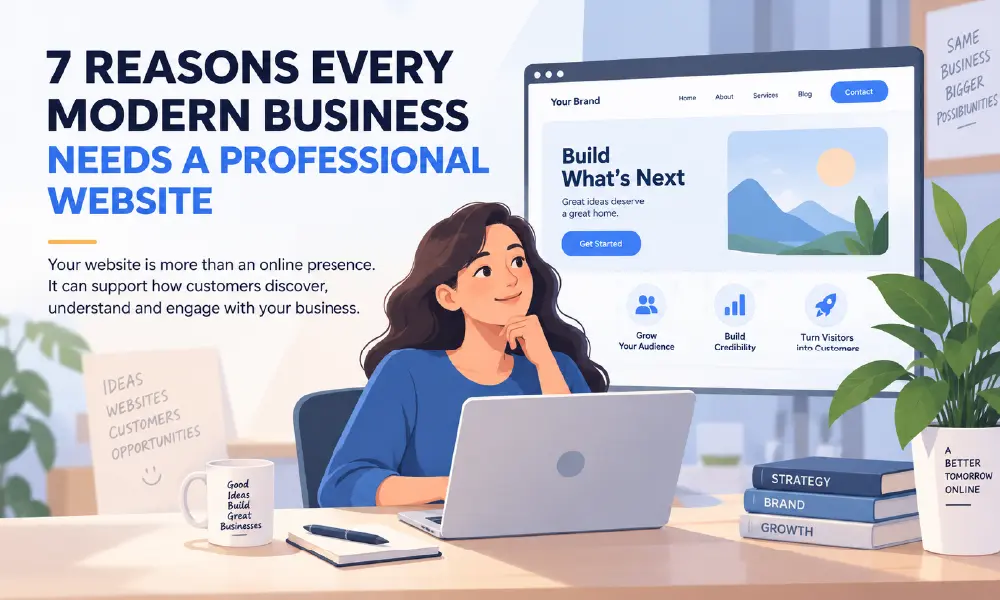
7 Reasons Every Modern Business Needs a Professional Website

Your customers may discover your business through social media, search engines, recommendations or online advertising. But when they want to understand who you are, what you offer and whether they should trust you, there is one place many will eventually look: Your website A professional website is more than a digital company profile. It can become the central point where people discover your business, understand your services, explore your work and take the next step. At WeWe have connect businesses with talents across areas including web development, web design, UI/UX, digital marketing, SEO, content and other digital services. Website design and web development are also among the services available through the WeWe Talent Marketplace. So why should a professional website still be a priority for a modern business? Here are seven reasons. 1. Your Website Creates a Digital Home for Your Business Social media pages are useful. Marketplace profiles can help you reach new audiences. Business directories can make your company easier to discover. But these channels should not be the only places where customers can learn about your business. A professional website gives your company its own digital space where you can organise your: Brand → Services → Expertise → Portfolio → Content → Contact Information Instead of making potential customers piece together information from several platforms, your website can bring the most important information into one place. For a small business, this might be a simple company website. For a growing organisation, it could develop into a more comprehensive platform containing service pages, resources, enquiries, customer support or e-commerce functionality. The important thing is that the website has a clear purpose. 2. It Helps People Understand What You Do Imagine visiting a business website and still wondering: What exactly does this company do? That is a problem. A good business website should make the answer easy to understand. Within a short time, visitors should be able to identify: Who you are What you offer Who you serve Why your solution may be relevant to them What they should do next This is where professional web design goes beyond making a website visually attractive. Content structure, navigation, page hierarchy, calls to action and user experience all contribute to how easily visitors can understand the business. Your website should not make people work hard to find the information they need. 3. A Professional Website Helps Build Credibility Before contacting a business, many potential customers want reassurance. They may look for information about the company, review its services, examine previous work or simply check whether its online presence appears professional and current. Your website can support that evaluation. Elements such as a clear company introduction, professional design, detailed service information, portfolio or project examples, contact information and customer testimonials can help visitors understand the organisation behind the brand. The objective is not to make your company appear larger than it is. It is to present the business clearly, consistently and professionally. WeWe itself uses project testimonials to help visitors understand customers’ experiences with services such as website development and social media management. 4. Your Website Can Support Search Visibility A website also gives your business content that can be structured around what potential customers are searching for. Instead of having only a homepage, businesses can build useful pages around: Products and services Industries served Customer problems Frequently asked questions Educational articles Company information Locations Resources This gives search engines more context about the business and gives potential customers more ways to discover relevant information. But simply having a website does not automatically create strong search visibility. Businesses should also consider areas such as Search Engine Optimisation (SEO), website content, technical structure and ongoing optimisation. This is also why web development and digital marketing increasingly work together rather than being treated as completely separate projects. WeWe’s marketplace includes talent and services across web development as well as SEO and broader digital marketing disciplines. (WeWe) 5. Your Website Can Work Beyond Business Hours Your team may finish work at 6 PM. Your website does not have to. A potential customer might discover your business in the evening, during the weekend or from another time zone. A professional website can continue providing useful information when nobody from your team is immediately available. Depending on the business, visitors may be able to: Explore Services → Review Work → Read FAQs → Submit an Enquiry → Request Information For an e-commerce business, the website can go further by supporting online product discovery and transactions. This doesn’t mean a website replaces human interaction. Instead, it can help customers complete the early stages of their journey before speaking with someone from your business. 6. It Gives Your Marketing Somewhere to Lead Think about the different ways a business promotes itself: Social Media Search Email Marketing Online Advertising Content Marketing Events QR Codes Business Cards Where should interested people go next? A website can act as the destination connecting these activities. For example: Social Post → Service Page Search Result → Helpful Article Advertisement → Landing Page Email Campaign → Product Page Event QR Code → Enquiry Form This is one reason a website should not be developed in isolation. Its design and content should support the broader customer journey. A beautiful website with no clear next step can still leave potential customers wondering what to do. 7. A Professional Website Can Grow with Your Business The website you need today may not be the website you need two years from now. Perhaps you start with: Home → About → Services → Contact As the business grows, you may need to introduce: Portfolio → Blog → Resources → New Services → E-Commerce → Customer Enquiries A professionally planned website can provide a stronger foundation for that growth. The key is not necessarily to build every possible feature on day one. Instead, think about what your business needs today and what it may reasonably need next. WeWe’s marketplace illustrates this range: current web-development offerings include everything from static profile

freelancer-google-chatgpt-search

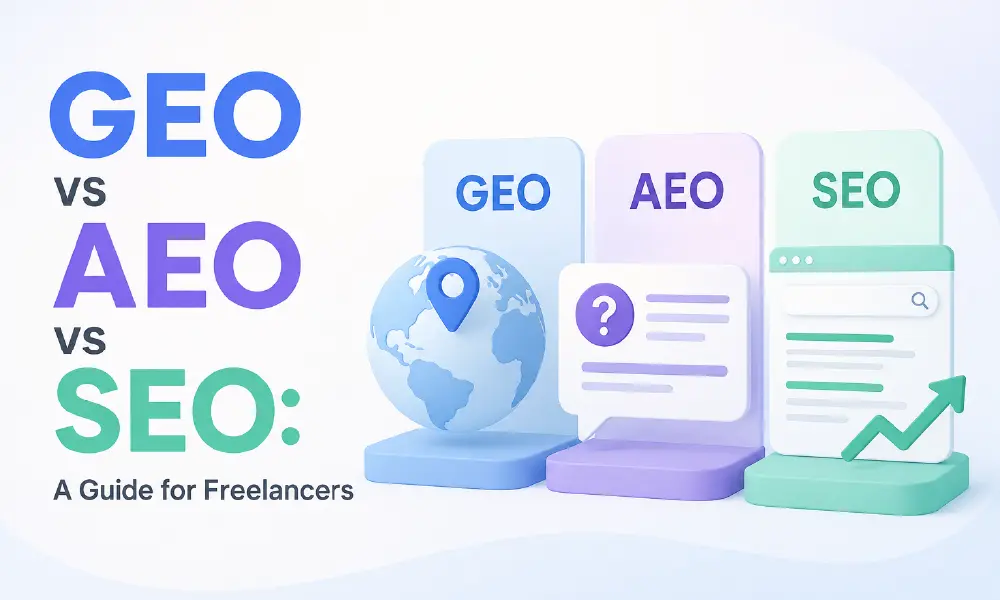
GEO vs AEO vs SEO: A Guide for Freelancers

Have you ever asked ChatGPT for the best portfolio designer, freelance writer, or UX researcher? Chances are, you’ve also searched on Google for the same thing. That’s because AI hasn’t replaced search; it has changed how people discover information. Today, professionals switch seamlessly between Google, ChatGPT, Perplexity, and other AI assistants to find answers, compare options, and make decisions. For freelancers, creators, researchers, and job seekers, this means one thing: Being visible online is no longer just about ranking on Google. It’s about being discoverable wherever people are searching. SEO: The Foundation of Your Online Presence Search Engine Optimization (SEO) is still the cornerstone of digital visibility. Whether you own a portfolio website, blog, or personal domain, SEO helps search engines understand who you are, what you do, and why your content matters. Strong SEO means: Your website appears in relevant Google searches. Your articles and portfolio are easier to discover. More people can find your expertise organically. Think of SEO as building a solid foundation for your digital identity. AEO: Helping AI Find Clear Answers Answer Engine Optimization (AEO) builds on SEO. Instead of simply ranking webpages, AI-powered search tools aim to answer questions directly. For example: Who is the best freelance illustrator for startups? How do I become a UX researcher? What should a data analyst include in a portfolio? Content that clearly answers these questions has a much better chance of appearing in AI-generated summaries and featured answers. For professionals, this means creating content that is: Easy to understand Well structured Focused on solving real questions GEO: Becoming a Trusted Source Generative Engine Optimization (GEO) takes another step forward. Large Language Models (LLMs) like ChatGPT don’t simply search; they generate responses by drawing information from trusted, authoritative sources. Instead of asking: “Can people find my website?” Ask yourself: “Would an AI assistant trust my content enough to reference it?” To improve your chances: Publish original insights. Share research and case studies. Build a consistent online presence. Earn mentions from reputable websites. Keep your content accurate and up to date. The more credible your content becomes, the more likely it is to be referenced in AI-generated answers. The SEO-GEO-AEO connection Jasper. (2025). GEO, AEO, and SEO: How They’re Connected.  They Work Better Together Rather than replacing one another, SEO, AEO, and GEO complement each other. SEO helps people find your website through search engines. AEO makes your content easier for AI-powered search to understand and summarize. GEO positions your work as a trusted source that generative AI may reference when creating responses. Together, they help your personal brand stay visible across both traditional search and conversational AI.

All Blogs

  • All Posts
  • Business Tips
  • Case Studies
  • Design
  • Guides & How-tos
  • Inspirations
  • Marketing
  • Others
  • Press Release
  • Technology
  • Trending
Load More

End of Content.

General

Latest Blog

All Blog

Scroll to Top