
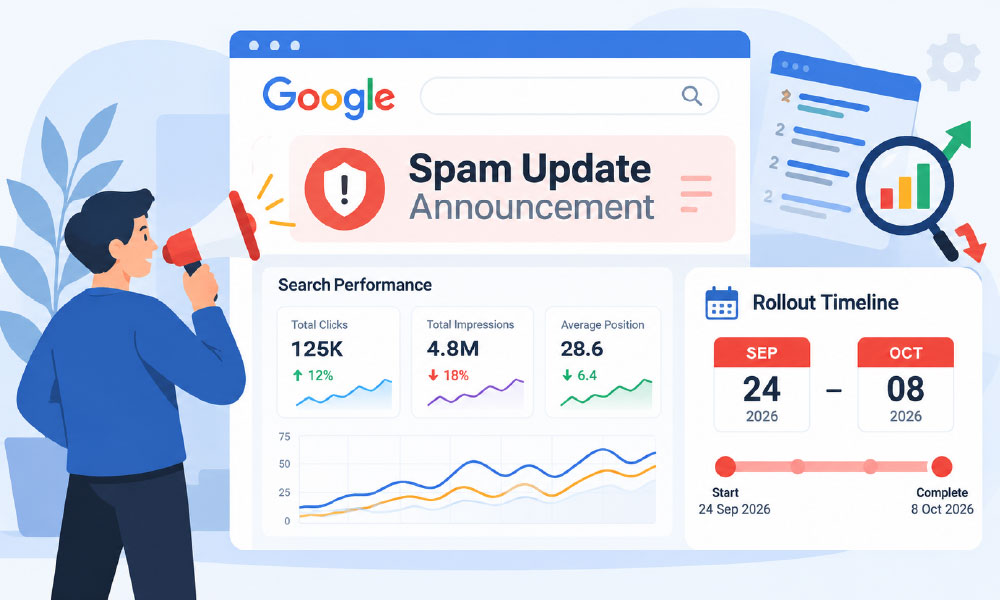
Google’s September 2026 spam update has officially finished rolling out. But what does it mean for your website’s rankings, organic traffic, and SEO strategy?
If your website experienced unexpected ranking changes in late September or early October, Google’s latest spam update may be worth investigating.
The update began on 24 September 2026 and ended on 8 October 2026, rolling out globally in nearly two weeks across all languages.
For businesses that depend on Google Search to attract potential customers, algorithm updates can raise important questions.
Has your website lost visibility? Should you update your content? Could your SEO practices be affecting your rankings?
Before making changes, it’s important to understand what Google has actually confirmed.
The key takeaway: A ranking drop does not automatically mean your website has been penalised. The right response is to investigate your data, review your SEO practices, and make improvements based on evidence.
Google's September 2026 Spam Update: What Happened?
Google regularly improves its search systems to identify websites and content that violate its spam policies.
These improvements are intended to reduce manipulative practices and maintain the usefulness of search results.
According to the Google Search Status Dashboard, the September 2026 spam update:
- Started: 24 September 2026
- Completed: 8 October 2026
- Rollout duration: 13 days and 16 hours
- Coverage: Global, across all languages
- Update type: Spam update
Unlike a broad core update, which involves changes to Google’s core ranking systems, a spam update focuses on improvements to automated spam-detection systems.
Google has not publicly specified which particular spam tactics were targeted by the September rollout.
This means businesses should avoid assuming that the update specifically targeted AI-generated content, particular industries, or certain website types.
Why does this matter for businesses?
Organic search visibility can influence how easily potential customers discover your website.
If an important product page or service page loses visibility, it may receive fewer visits from people searching for relevant solutions.
However, search performance is affected by multiple factors.
A change in rankings during an algorithm update does not, by itself, establish that the update caused the change.
Business takeaway: Understand the confirmed facts before deciding whether your website needs corrective action.
Did Google's Spam Update Affect Your Website?
If you noticed changes in search rankings or organic traffic between 24 September and 8 October, the update is one possible factor to investigate.
However, not every ranking fluctuation indicates a spam-policy violation.
Website performance may also change because of:
- Seasonal changes in search demand
- Competitors improving their content or websites
- Changes in how users search
- Technical website or indexing issues
- Changes to website content or structure
- Reporting differences between SEO tools
During the September rollout, SEO monitor also reported unusual fluctuations in third-party ranking trackers.
Its analysis suggested that some automated searches returned incomplete or inaccurate results, creating ranking reports that did not consistently reflect what users saw in Google Search.
This highlights an important point for marketers.
A sudden ranking drop in an SEO tool is not always the same as a confirmed decline in organic search performance.
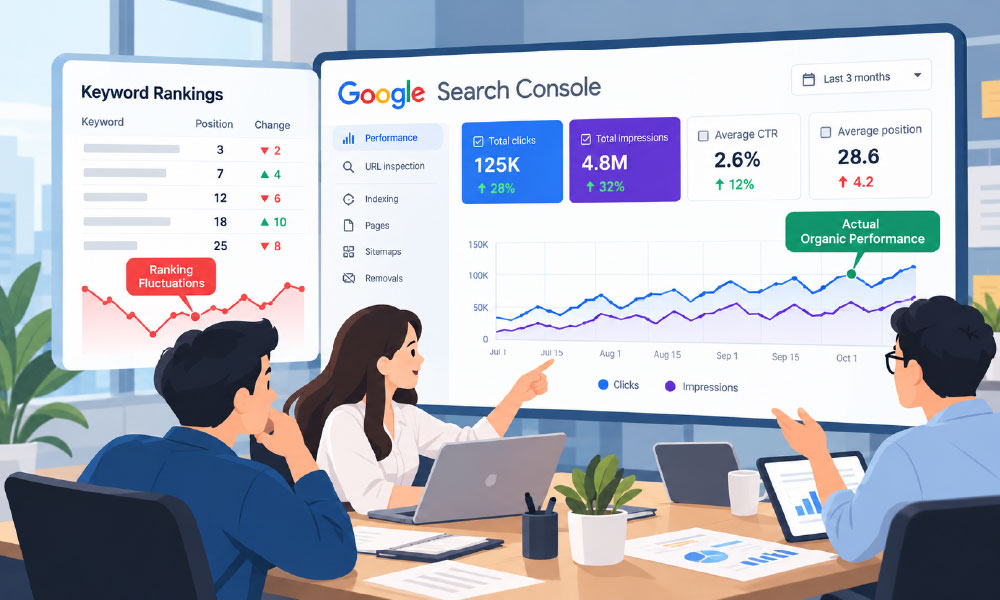
Example: An SME Notices a Ranking Drop
Imagine a Malaysian SME that relies on Google Search to attract customers to its website.
Its weekly SEO report shows that several important keywords dropped significantly at the end of September.
The marketing team becomes concerned and considers rewriting its website content.
However, when the team checks Google Search Console, organic clicks and impressions remain relatively stable. In this situation, the ranking report alone may not justify major content changes.
The business should continue monitoring performance and investigate whether the reported movement reflects an actual change in search visibility.
Business takeaway: Verify ranking changes using reliable performance data before making significant website changes.
How to Check Your SEO Performance After the Update
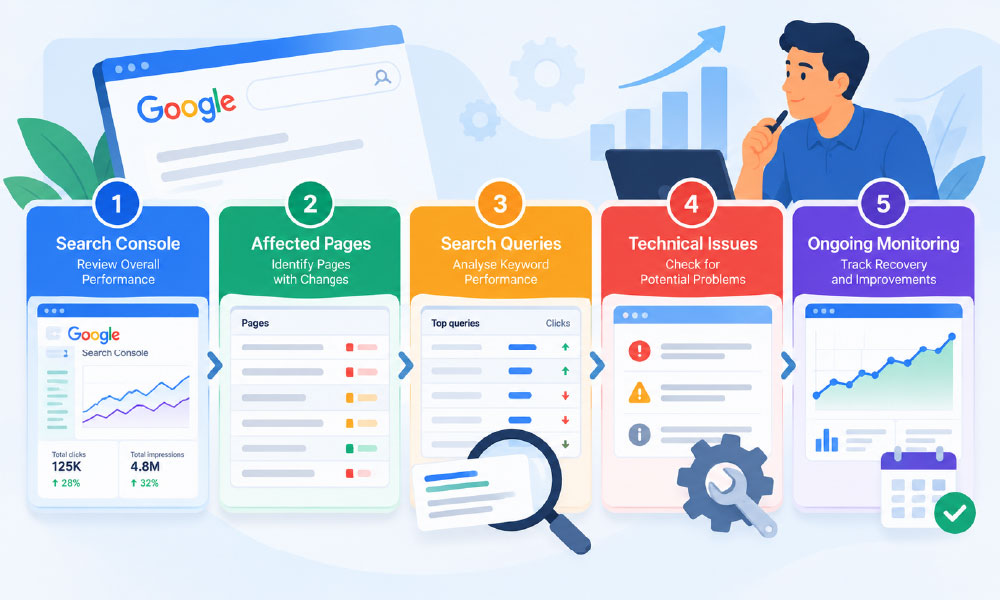
Step 1: Review Google Search Console
Start by examining your website’s performance in Google Search Console
Focus on four key metrics:
|
Metric
|
What It Tells You
|
|---|---|
|
Total clicks
|
How many times users clicked through to your website from Google Search
|
|
Total impressions
|
How often your website appeared in Google Search results
|
|
Average CTR
|
The percentage of impressions that resulted in clicks
|
|
Average position
|
Your website's average ranking position across reported search appearances
|
Table 1: Review Google Search Console
Compare performance before, during, and after the rollout.
For example, you can examine:
- Before: 10–23 September 2026
- During: 24 September–8 October 2026
- After: 9–22 October 2026
These periods can provide an initial comparison, although differences in weekday patterns, search demand, and other factors should also be considered.
Look for sustained changes rather than reacting to a single day of unusual results.
Step 2: Identify Which Pages Were Affected
If organic traffic declined, determine whether the change affected your entire website or only specific pages.
For example:
- Did your homepage lose visibility?
- Were particular service pages affected?
- Did several blog articles experience lower impressions?
- Were changes concentrated around certain keywords?
This helps narrow the investigation.
A decline affecting one page may require a different response from a site-wide performance change.
Step 3: Check Your Search Queries
Review the keywords and search queries that previously generated impressions and clicks.
Look for changes in:
- Branded versus non-branded searches
- Informational versus commercial queries
- High-value service keywords
- Geographic search terms
- Queries associated with affected pages
For SMEs, this is particularly important because not all traffic has the same business value.
A decline in visitors to a general informational article may have different implications from a decline in searches for a core service.
Step 4: Investigate Technical Issues
Before attributing a decline to Google’s spam update, check whether technical issues may have affected your website.
These can include:
- Pages unintentionally blocked from indexing
- Incorrect canonical tags
- Website migration or URL changes
- Broken internal links
- Server errors
- Changes to important page content
Google Search Console’s indexing reports can help identify certain technical problems.
Step 5: Monitor Performance Over Time
Avoid making major changes based solely on short-term fluctuations.
Continue reviewing your website’s search performance to determine whether the changes persist.
If the evidence suggests a potential spam-policy issue, review Google’s published policies and investigate relevant website practices.
Business takeaway: A structured SEO review helps businesses make informed decisions instead of reacting to every ranking movement.
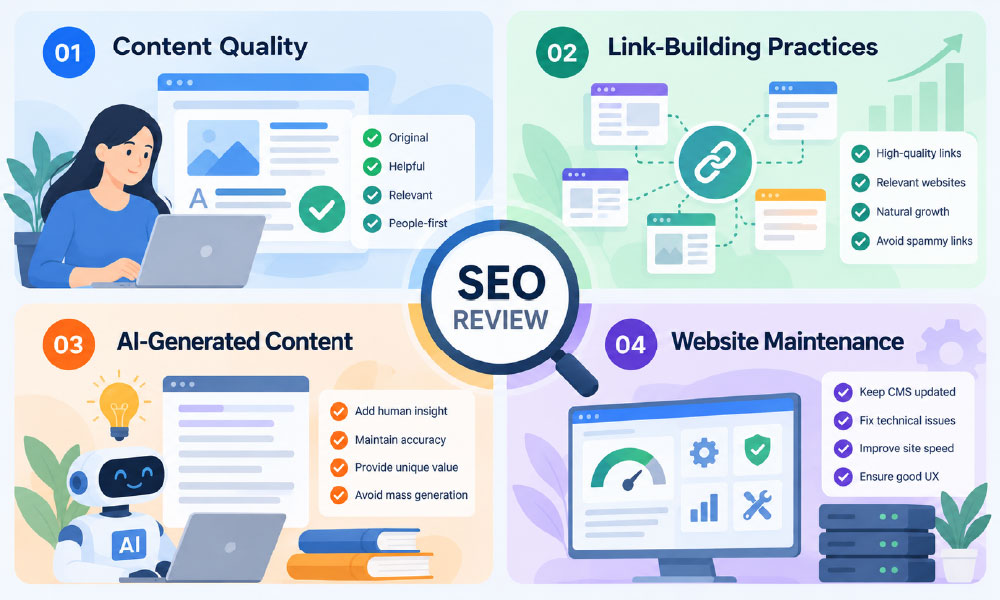
What Should Marketers Review After Google's Spam Update?
Even if your website has not experienced a noticeable decline, the completed update provides a useful opportunity to review your SEO practices.
The objective is not to change everything.
It is to identify areas where your website can better serve users and maintain responsible search optimisation practices.
Review 1: Content Quality and Relevance
Consider whether your website content provides meaningful value to its intended audience.
Ask:
- Does the content answer a genuine customer question?
- Is the information accurate and relevant?
- Does the page provide useful explanations or practical guidance?
- Is important information outdated?
- Does the content accurately represent your products or services?
For example, a digital marketing agency publishing an article about SEO should explain the topic clearly and provide actionable information.
Simply repeating popular keywords without addressing the reader’s needs is unlikely to create a useful experience.
Recommended action: Identify outdated, inaccurate, or unhelpful pages and prioritise improvements where there is a clear user benefit.
Review 2: Link-Building Practices
Backlinks can play a role in how search engines discover and evaluate content.
However, Google’s spam policies prohibit certain practices designed to manipulate rankings through links.
Businesses should review whether their link-building activities involve questionable arrangements or attempts to artificially influence search performance.
Instead of focusing only on the number of backlinks, prioritise relevant content, legitimate partnerships, and appropriate methods of earning visibility.
Recommended action: Review your link-building practices against Google’s link spam policies. Do not assume every unfamiliar backlink requires removal.
Review 3: AI-Generated Content
AI tools are increasingly used to support content research, planning, drafting, and optimisation.
However, the use of AI does not automatically make content spam.
The concern is whether automation is being used primarily to produce large amounts of content intended to manipulate search rankings.
For businesses using AI-assisted content workflows, human review remains important.
Check whether published content is:
- Factually accurate
- Relevant to the intended audience
- Clear and useful
- Appropriately reviewed
- Consistent with the business’s expertise and offerings
Recommended action: Establish a content review process that evaluates usefulness and accuracy, regardless of whether AI tools were involved in production.
Review 4: Website Maintenance
SEO is not limited to publishing articles and selecting keywords.
Technical website maintenance also matters.
Businesses should periodically review indexing, internal links, page accessibility, and other technical factors that affect how search engines access website content.
Recommended action: Schedule regular technical checks rather than waiting for an algorithm update to reveal potential issues.
What Should You Avoid After a Google Algorithm Update?
When search rankings decline, it can be tempting to make immediate changes.
However, reacting without sufficient evidence can create additional problems.
Avoid Rewriting Every Page Immediately
Not every page needs updating after a Google spam update.
Prioritise pages where you have identified a genuine content, technical, or policy-related issue.
Avoid Assuming Google Has Penalised Your Website
A decline in traffic or rankings does not automatically mean Google has identified your website as spam.
Investigate other possible causes before reaching that conclusion.
Avoid Relying on One SEO Tool
Third-party rank trackers can provide useful information, but their reports should be considered alongside Google Search Console and website analytics.
Avoid Chasing Quick Recovery Promises
No SEO specialist can guarantee that a website will recover its previous rankings within a specific period.
Google explains that its automated systems may take months to recognise sustained improvements after certain spam-related issues are addressed.
Avoid Changing Your Strategy Without Understanding the Problem
Major website changes should be supported by clear findings and a defined objective.
Business takeaway: The most effective response to an algorithm update is careful analysis, not rushed optimisation.
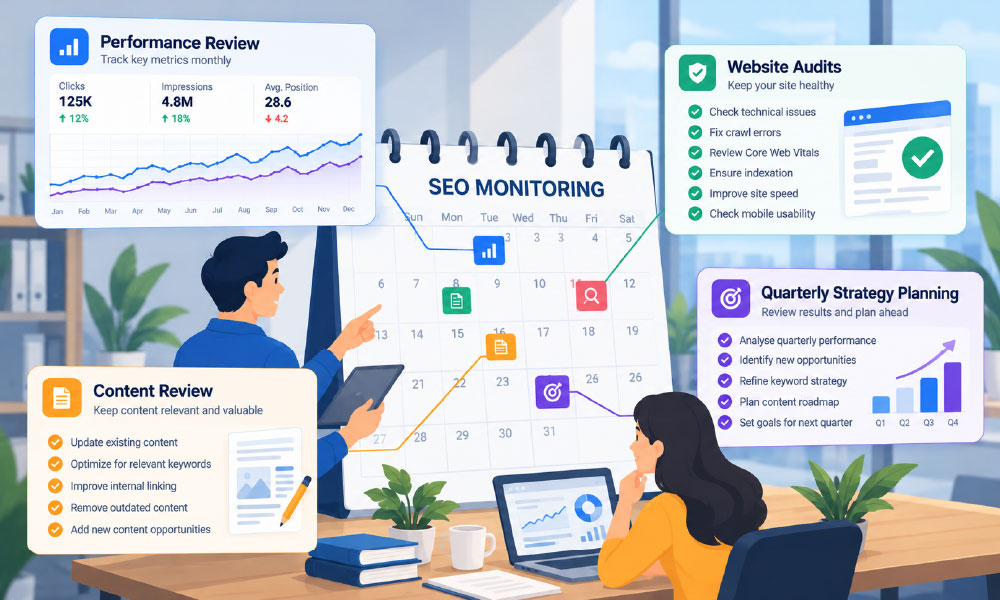
Why SEO Requires Ongoing Monitoring
Google’s September spam update is a reminder that SEO is an ongoing business activity.
Publishing a website or optimising its pages once does not mean search performance will remain unchanged.
Businesses need to monitor how their websites perform, maintain accurate content, and respond to relevant technical or market developments.
For SMEs, a practical SEO maintenance approach may include:
|
Activity
|
Suggested Frequency
|
|---|---|
|
Review organic search performance
|
Weekly or monthly
|
|
Check important landing pages
|
Monthly
|
|
Review technical indexing issues
|
Monthly or after major website changes
|
|
Update outdated content
|
Based on content accuracy and business relevance
|
|
Review SEO strategy
|
Quarterly or when significant changes occur
|
Table 2: SEO maintenance approach
These are suggested planning intervals, not requirements established by Google.
The appropriate schedule depends on website size, available resources, and business priorities.
SEO Is About More Than Rankings
Keyword rankings are useful indicators, but they should not be the only measure of SEO performance.
Businesses should also consider whether organic search is attracting relevant visitors and contributing to meaningful outcomes.
Depending on the website, these may include:
- Enquiries from potential customers
- Product or service page visits
- Qualified leads
- Online purchases
- Relevant content engagement
A sustainable SEO strategy should connect search visibility with business objectives.
When Should Businesses Consider Hiring an SEO Specialist?
Not every business has a dedicated SEO team.
For SMEs managing multiple priorities, investigating technical issues or maintaining an ongoing optimisation strategy can require additional time and expertise.
An external SEO specialist may be useful when:
Organic traffic has declined without a clear explanation.
A specialist can review performance data, investigate potential causes, and recommend appropriate next steps.
The website has technical SEO issues.
Some problems involving indexing, site structure, and technical implementation require specialised knowledge.
Existing content needs improvement.
An SEO content specialist can help evaluate search intent, identify content gaps, and improve website information.
The business is planning a website redesign or migration.
SEO input during planning can help identify risks associated with changes to URLs, content, and website structure.
The internal marketing team needs additional support.
Freelance professionals can provide project-based expertise without necessarily requiring a permanent hire.
However, businesses should evaluate specialists based on their experience, approach, communication, and ability to explain recommendations.
Be cautious of anyone promising guaranteed rankings or immediate recovery after an algorithm update.
Frequently Asked Questions
No. Ranking changes can result from several factors, including competition, search demand, technical issues, and algorithm updates. A decline alone does not establish a spam-policy violation.
Review Google Search Console performance before, during, and after the rollout. Compare clicks, impressions, queries, and affected pages, then investigate other possible causes.
No. Prioritise changes where you have identified inaccurate information, unhelpful content, technical issues, or practices that may conflict with Google’s policies.
There is no guaranteed recovery timeline. Google notes that its automated systems may take several months to recognise sustained compliance after relevant spam-policy issues have been addressed.
WeWe Talent Marketplace helps businesses connect with freelance digital professionals for project-based requirements, including SEO-related work, content development, website improvements, and digital marketing.