

Small and medium-sized enterprises (SMEs) often need digital expertise to build websites, improve customer experiences, manage digital marketing, and develop new business capabilities. But hiring a full-time specialist for every digital function may not be practical.
The good news? SMEs don’t need a large in-house technology team to move digital projects forward.
By working with freelancers, external specialists, and project management service providers, businesses can access relevant expertise based on their project requirements, budget, and timeline.
The key is knowing which skills are needed, when to bring in external support, and how to manage the work effectively.
1. Why SMEs Need Flexible Access to Digital Skills
Digital projects often require different types of expertise at different stages.
For example, launching a new business website may involve a UI/UX designer, web developer, content writer, and SEO specialist. Once the website is live, the business may need occasional technical updates and ongoing marketing support rather than the same full team every day.
Maintaining permanent roles for all these functions can create additional recruitment, management and staffing commitments.
A flexible talent model allows SMEs to engage specialists for specific needs while keeping their internal teams focused on core business activities.
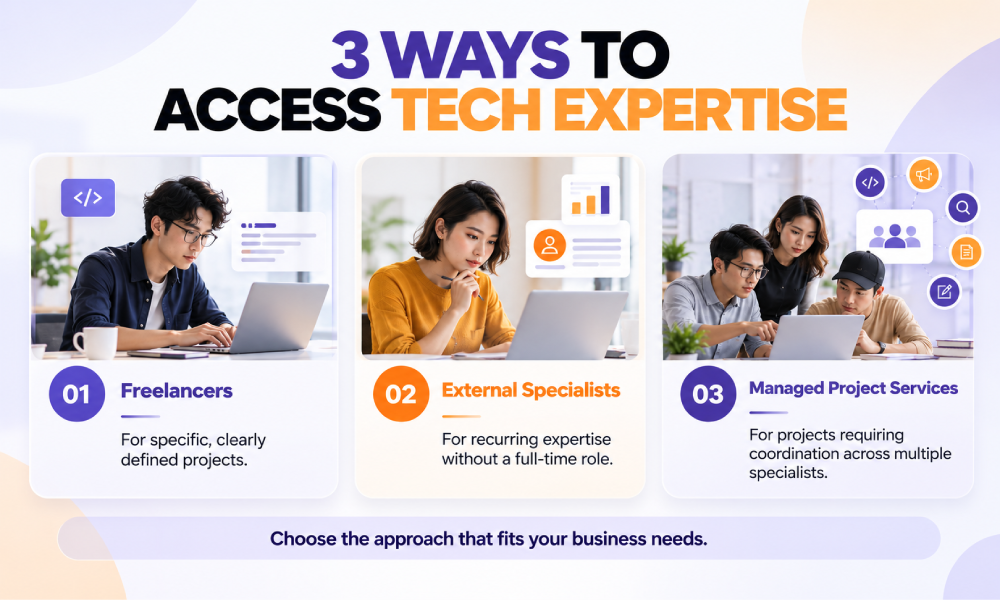
2. Three Ways to Access Tech Expertise Without Expanding Your Team
Option 1: Hire freelancers for specific projects
Freelancers can be useful when a business has a clearly defined task, such as redesigning a landing page, developing a website feature or preparing marketing content.
This approach is particularly suitable when an internal team member can oversee the project and review deliverables.
Option 2: Work with external specialists on a recurring basis
Some SMEs need expertise regularly but not necessarily on a full-time basis.
For example, a business might engage an SEO specialist for recurring optimisation work or a designer for monthly marketing campaigns.
Recurring arrangements can provide continuity without automatically requiring a permanent position.
Option 3: Use a managed project service
When a project involves multiple specialists, coordinating tasks, timelines and deliverables can become challenging.
A managed project service can help organise talent sourcing, project coordination and delivery oversight.
This approach may suit SMEs that have clear business goals but limited internal resources to manage the entire project.
3. Freelancers vs. In-House Teams vs. Managed Projects
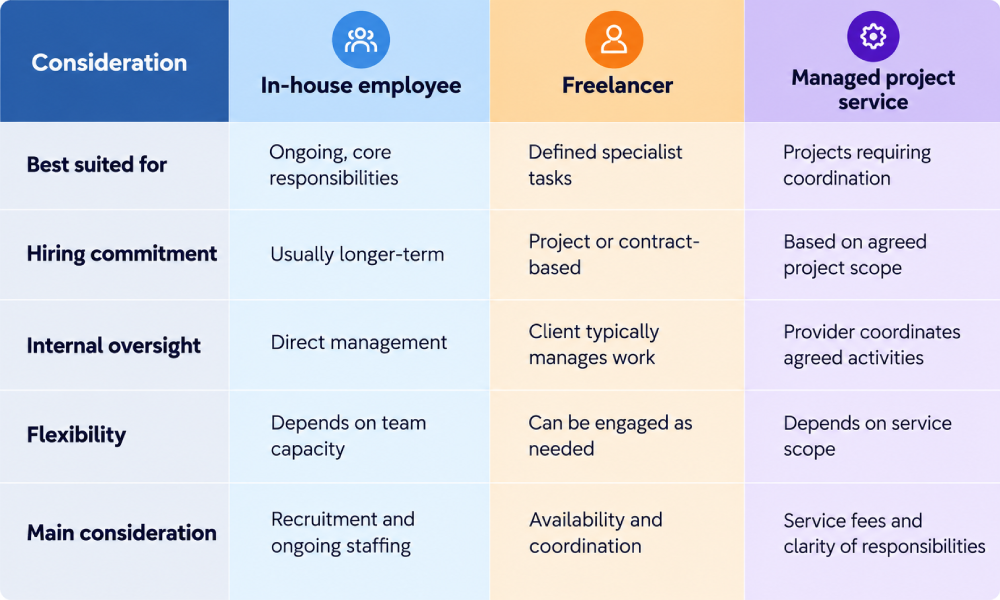
Table 1: Freelancers vs. In-House Teams vs. Managed Projects
There is no single model that works for every SME. Many businesses benefit from combining a small internal team with external specialists.
4. How to Get Started: A Practical Five-Step Approach
- Identify the business problem. Is the priority launching a website, improving customer experience or generating more qualified enquiries?
- Define the project scope. List expected deliverables, essential features, budget and target timeline.
- Identify the skills required. Determine whether the project needs one specialist or several.
- Choose the right engagement model. Decide whether to manage freelancers directly or seek project coordination support.
- Set clear milestones. Agree on responsibilities, communication, review stages and completion criteria before work begins.
A clear project brief helps external professionals understand expectations and reduces avoidable misunderstandings.
Frequently Asked Questions
Yes. SMEs can engage freelancers, specialist service providers or managed project teams for defined digital projects. The best approach depends on the frequency of work, required expertise and internal management capacity.
Start with skills that address an immediate business need. For example, a business launching an online presence may prioritise website development, UI/UX design and content creation. A business focused on online visibility may need digital marketing and SEO support.
It can be. Freelancers may work on short-term assignments or longer engagements. For longer projects, businesses should establish clear expectations for availability, communication, milestones and ongoing maintenance.
SMEs can appoint an internal project owner or engage a project management service to coordinate work. Clear documentation, defined responsibilities and regular progress reviews are important in either approach.
Not necessarily. Costs depend on project complexity, specialist rates, duration, management requirements and ongoing support. SMEs should compare total project costs and expected business value rather than assuming one model is always less expensive.