
No-code and low-code platforms are no longer just startup tools. They are becoming a major part of how modern businesses build apps, automate workflows, and launch digital products. Instead of relying fully on traditional developers, companies are now empowering non-technical teams to create apps through visual drag-and-drop platforms. This shift is helping businesses reduce costs, speed up development, and innovate faster.
Why No-Code Is Growing So Fast
Businesses today face three major challenges:
- Legacy technology slowing innovation
- Budget limitations
- Lack of technical talent
According to recent statistics:
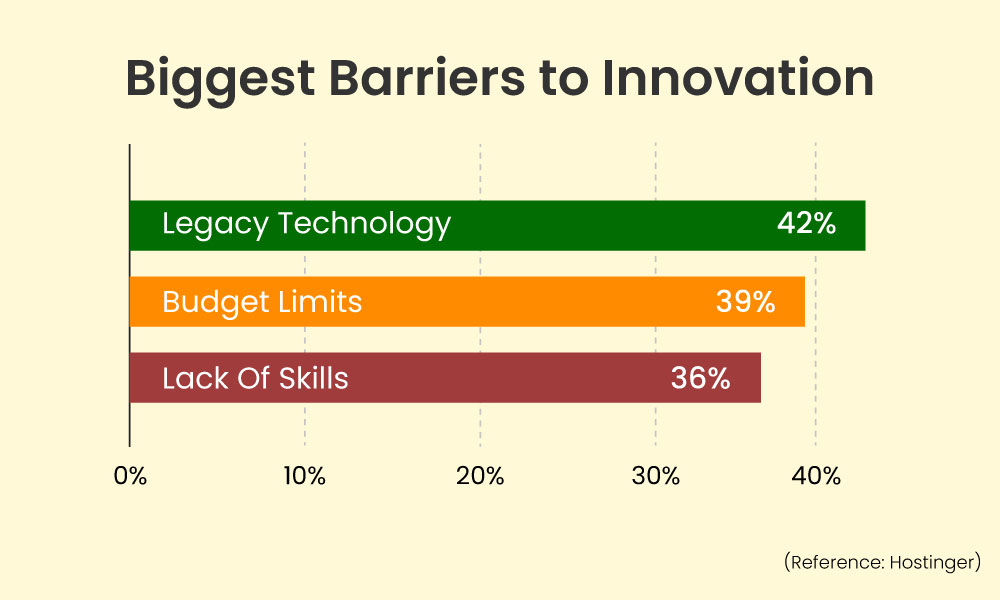
- 42% of organizations say outdated systems are their biggest obstacle
- 39% struggle with budget limitations
- 36% face skill shortages
No-code platforms solve many of these issues by making software development more accessible and efficient.
No-Code Is Becoming Mainstream
Key statistics:
- Gartner predicts over 75% of enterprise applications will use low-code/no-code by 2026
- The low-code market has reached USD 28.75 billion globally
This is no longer a niche trend. It is becoming standard across industries.
Businesses Are Building Apps Faster
One of the biggest advantages of no-code is speed.
Companies using no-code platforms report:
- Up to 90% reduction in development time
- 10x faster app development
- 70% cost savings on projects
- 362% average ROI from no-code implementations
Non-Technical Users Are Leading the Growth
A major shift in software development is the rise of citizen developers. These are non-technical users building applications without traditional coding skills.
Current adoption trends:
- Citizen developers now outnumber professional developers 4:1
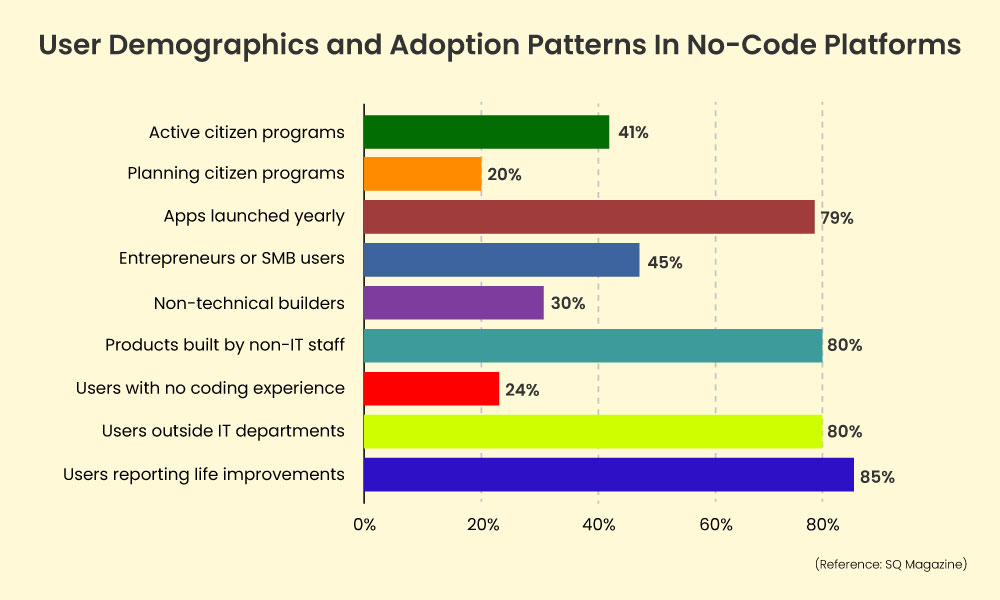
- 80% of low-code users are outside IT departments
- 30% of no-code users are non-technical individuals
- 24% had zero coding experience before using no-code tools
Top Use Cases for Low-Code Platforms
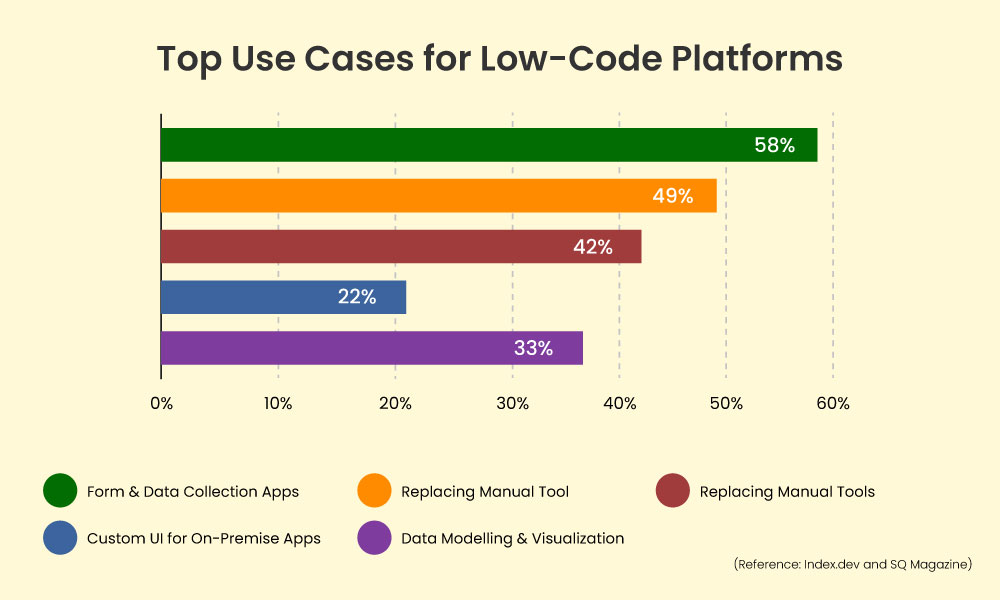
Businesses are using no-code for:
- Forms and data collection
- Workflow automation
- Internal business tools
- Reporting dashboards
- Customer portals
- Replacing spreadsheets and manual systems
Top adoption areas include:
- Finance
- Healthcare
- Education
- Retail
- Enterprise operations
AI Is Accelerating No-Code Even Further
AI integration is becoming one of the biggest growth drivers in the no-code market.
Recent trends show:
- The global no-code AI market is valued at USD 8.6 billion
- Projected to grow to USD 75.14 billion by 2034
- AI-powered automation and predictive workflows are becoming standard features
AI is making app creation even easier by helping users:
- Generate workflows
- Build interfaces
- Automate tasks
- Analyze data
- Create apps faster
Why Enterprises Are Investing in No-Code
Large companies are increasingly adopting multiple no-code tools.
Current enterprise trends:
- 75% of large enterprises use at least four low-code tools
- 87% of enterprise developers now use low-code platforms
- 84% adopt no-code for better IT efficiency
Final Thoughts
No-code platforms are reshaping the future of software development.
What started as a simple drag-and-drop trend is now becoming a major part of enterprise digital transformation. Businesses are using no-code to:
- Reduce costs
- Speed up innovation
- Empower non-technical teams
- Improve operational efficiency
- Scale digital solutions faster
As AI continues integrating into no-code platforms, the gap between technical and non-technical software creation will continue shrinking.
The future of development is no longer just about coding. It is about building faster, smarter, and more accessibly.