

For years, Search Engine Optimization (SEO) has been the foundation of online visibility. Businesses and content creators have relied on SEO to rank higher on search engine results pages (SERPs), using strategies like keyword optimization, backlinks, page speed improvements, and structured content. The goal has always been clear: get users to click on your link. But search behaviour is changing.
With the rise of AI-powered search experiences, voice assistants, and featured snippets, users are increasingly getting answers without clicking. This shift has given rise to a new concept: Answer Engine Optimization (AEO).
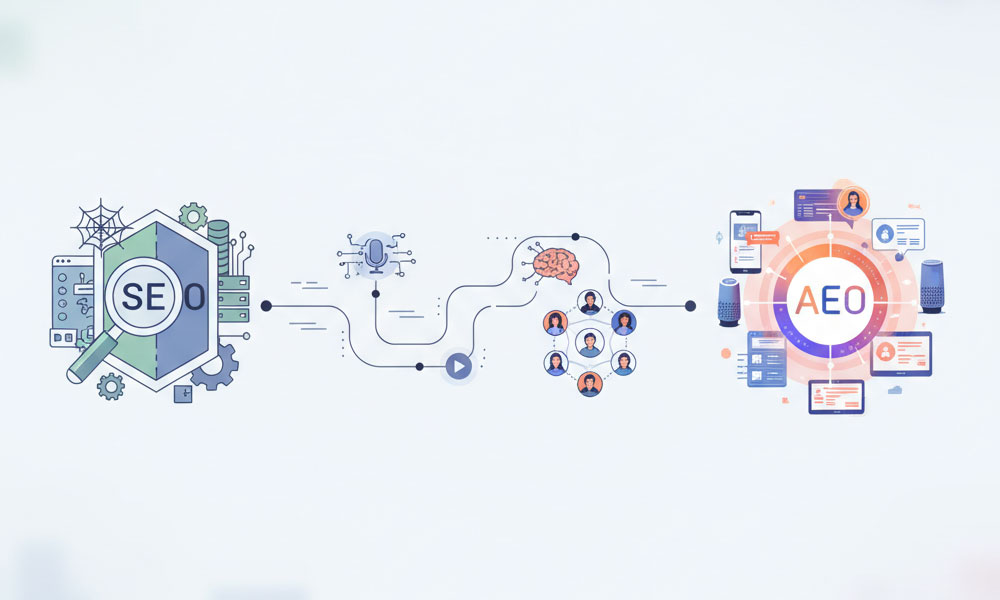
The Evolution from SEO to AEO
Traditionally, SEO focused on helping content rank for specific keyword queries. However, as highlighted by Agrawal (2019), AEO emerged alongside the growing importance of “position zero” also known as featured snippets where users receive direct answers at the top of search results.
Supporting this trend, research by STAT Search Analytics (2021) found that over 35% of clicks come from question-based queries, emphasizing the value of occupying these highly visible answer positions.
AEO builds on this behavior by optimizing content not just to rank, but to be selected as the answer.
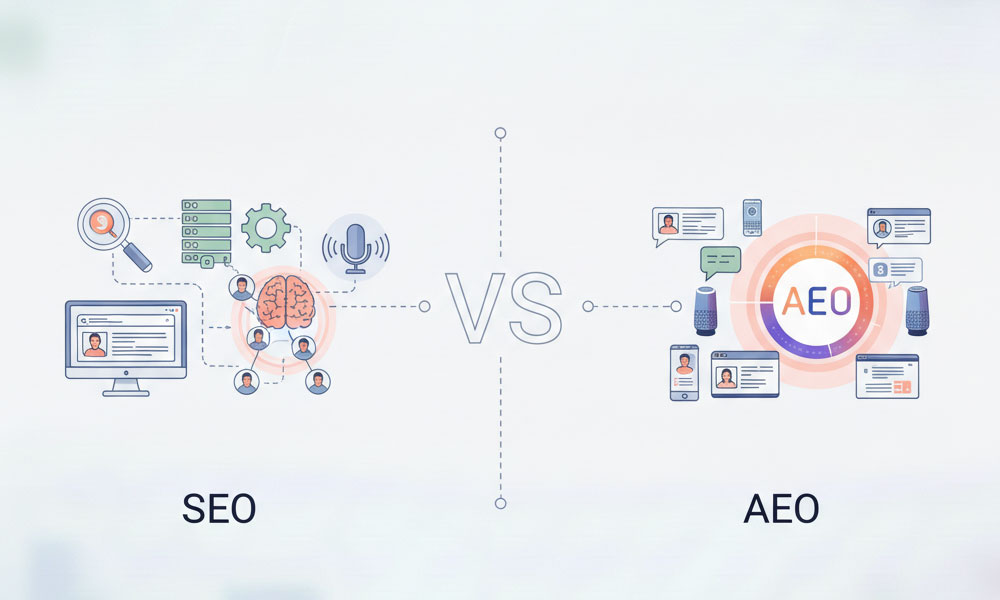
What is SEO?
SEO (Search Engine Optimization) is about improving your website’s visibility in search engines like Google.
Key focus areas include:
- Keyword optimization
- Technical performance (e.g., page speed, mobile-friendliness)
- Backlinks and authority
- On-page structure and metadata
The objective: rank higher and drive clicks to your website.
What is AEO?
AEO (Answer Engine Optimization) focuses on structuring content so it can be directly used by AI systems to answer user queries.
This includes:
- Optimizing for featured snippets (position zero)
- Using structured data markup to provide semantic context
- Creating clear, scannable content (bullet points, tables, FAQs)
- Aligning content closely with user intent and questions
AEO ensures your content can be surfaced in:
- Google’s Search Generative Experience (SGE)
- Voice assistants (e.g., Alexa, Siri)
- AI chat interfaces and answer engines
The objective: be the answer, not just a result.
SEO vs AEO: Key Differences
|
Aspect
|
SEO
|
AEO
|
|---|---|---|
|
Goal
|
Rank higher in search results
|
Provide direct answers
|
|
Focus
|
Keywords, backlinks, rankings
|
User questions, intent, clarity
|
|
Output
|
Clicks to website
|
Immediate answers (no click needed)
|
|
Format
|
Long-form, optimized pages
|
Structured, scannable content
|
|
Platforms
|
Search engines
|
AI engines, voice assistants, chatbots
|

What AEO Matters Now
As AI continues to reshape search, traditional metrics like click-through rate (CTR) are becoming less reliable indicators of success. According to Bal (2025), AEO does not replace SEO it enhances it.
Instead of focusing only on clicks, businesses should now also track:
- Brand mentions in AI-generated responses
- Visibility in featured snippets and answer boxes
- Referral traffic from AI-driven platforms
In this evolving landscape, visibility is no longer just about ranking it’s about being recognized as a trusted source of answers.
The Role of Structured Content
Agrawal (2019) emphasizes that AEO relies heavily on structured data and semantic clarity. This helps search engines and AI systems better understand the context and intent of your content.
Effective AEO content often includes:
- Bullet points
- Tables
- FAQs
- Clear headings
- Concise, direct answers
These formats make it easier for AI to extract and present information accurately.

Final Thoughts
The shift from SEO to AEO reflects a broader transformation in how people search and consume information. Users want faster, clearer answers, and AI is delivering them.
However, this doesn’t mean SEO is becoming obsolete. Instead, the future belongs to those who can combine both strategies effectively.
In this new multi-modal search environment, competitive advantage will come from:
- Adapting to changing user behaviour
- Structuring content for both humans and AI
- Integrating traditional SEO with emerging AEO practices
In short, it’s no longer just about ranking on search engines it’s about becoming the answer people (and AI) trust most.