Building a website in 2026 no longer carries the same weight it once did. What used to require weeks of coordination between designers and developers can now be done within hours, sometimes even minutes, with the help of AI-powered tools. Layouts can be generated instantly, content can be drafted on demand, and entire pages can take shape from just a short prompt.
At first glance, this shift seems unsettling, especially for freelancers. If technology can now produce a website so quickly, it raises a reasonable question: where does that leave the people who used to build them?
Yet the reality is less dramatic than it appears. AI is not removing the need for freelancers; it is redefining it. As the process of building becomes easier, the expectations for what a website should achieve have quietly become higher.
From “Building Websites” to “Solving Problems”
Traditionally, freelancers were hired to build websites from the ground up. The process involved design, development, testing, and deployment. Today, AI tools can handle a large part of that foundation. This changes the nature of freelance work. Clients are no longer just looking for someone who can “build a website.” They are looking for someone who can:
- Create a site that converts visitors into customers
- Structure content for search engines
- Deliver a clear brand message
- Provide a smooth user experience
In other words, the value has shifted from execution to thinking.
AI as a Starting Point, not a Finished Product
Tools like Canva Website Builder have made it remarkably easy to assemble a clean, functional website in very little time. With just a few inputs, a basic structure can be generated, complete with suggested layouts and prewritten content.
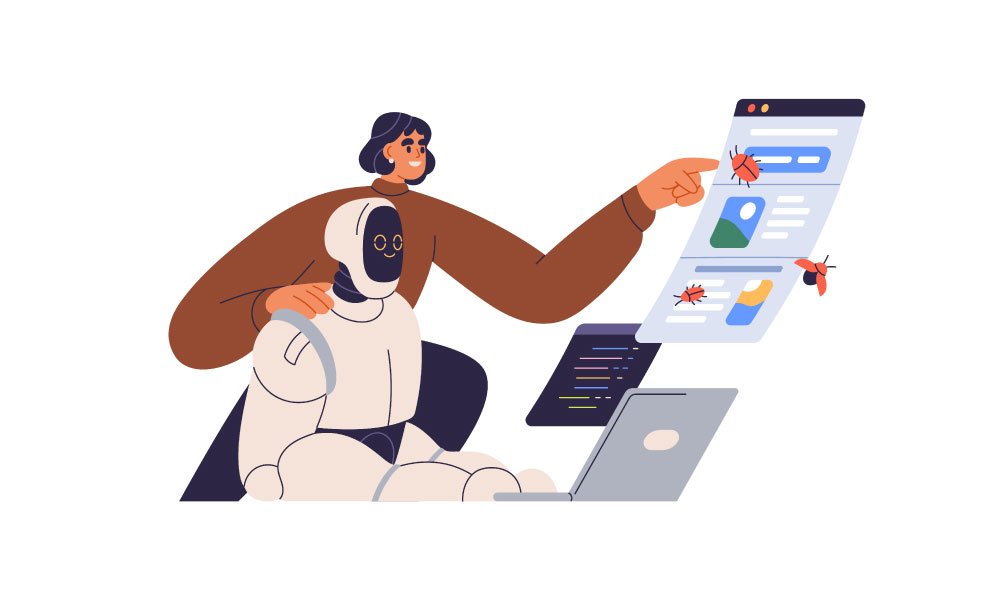
And yet, when looked at more closely, these outputs often feel incomplete. The messaging may lack nuance, the structure may not reflect real user behavior, and the design, while polished, can feel generic. This is where freelancers continue to play a crucial role. Rather than replacing the work entirely, AI changes where the work begins. Instead of starting from a blank page, freelancers now start from a rough draft one that can be reshaped, refined, and aligned with a client’s actual objectives. The difference between a generated website and an effective one often lies in these refinements, which require context, judgment, and experience.
Efficiency and the Expansion of Freelance Work
One of the more interesting effects of AI tools is not the reduction of work, but its expansion. By dramatically reducing the time required for initial production, freelancers are able to take on a different kind of workload.
Projects that once felt too small to justify the time investment are now viable. A simple landing page, a quick campaign site, or a basic business presence can be delivered efficiently without compromising quality. At the same time, larger projects can move faster, allowing freelancers to focus more energy on optimization rather than construction.
This shift also allows professionals to move beyond their traditional roles. A content writer can now build a simple page to present their copy in context. An Search Engine Optimization (SEO)specialist can implement structural improvements directly, rather than relying entirely on developers. Designers, too, can bring their ideas to life more independently, using tools that translate visual concepts into functioning websites. In this sense, AI does not narrow the scope of freelance work it broadens it.
Where Human Judgment Still Matters
Despite the speed and convenience of modern tools, there are still clear limits to what AI can achieve on its own. This becomes particularly evident in more complex projects, such as ecommerce websites built on platforms like Shopify or WooCommerce, where decisions around structure, user flow, and conversion strategy have a direct impact on business outcomes.
Even in simpler websites, effectiveness depends on factors that are difficult to automate: clarity of message, alignment with audience expectations, and the subtle decisions that shape how users interact with a page. These are not technical problems as much as they are human ones. They require interpretation, context, and an understanding of intent, areas where freelancers continue to offer value that tools alone cannot replicate.
Adapting to a Different Way of Working
The emergence of AI website builders does not force a choice between doing everything independently and hiring external help. Instead, it introduces a more nuanced way of working, where tools and expertise coexist.
Freelancers who adapt to this shift tend to approach AI not as competition, but as part of their process. They use it to accelerate early-stage work, to test ideas quickly, and to reduce repetitive tasks, while reserving their time and attention for the aspects that require deeper thinking.
In doing so, they are able to deliver work that is both faster and more considered an outcome that would be difficult to achieve through manual effort alone.