
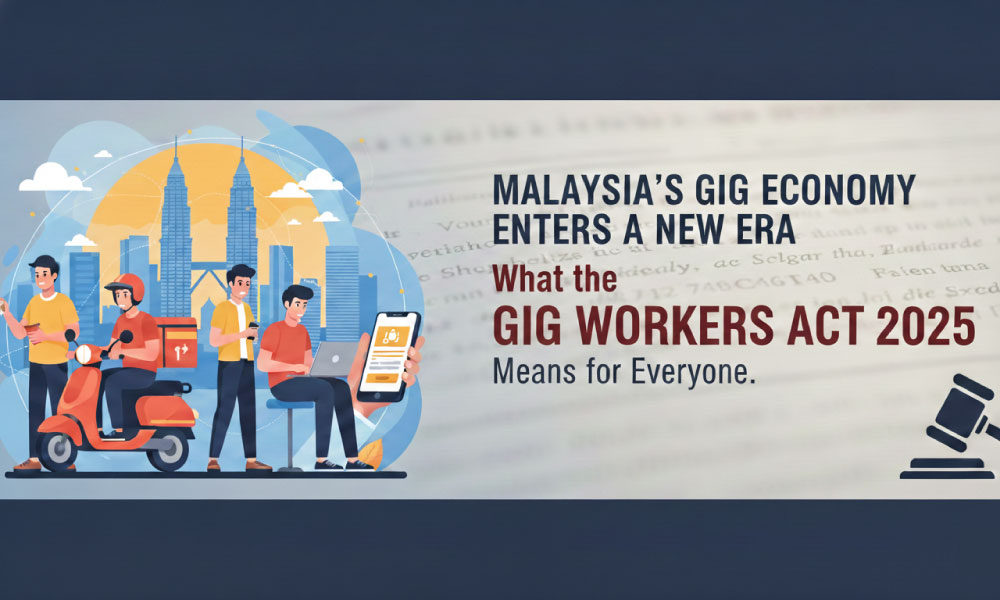
Malaysia has taken a significant step toward shaping the future of work with the introduction of the Gig Workers Act 2025 (Act 827). As of March 31, this landmark legislation establishes a dedicated legal framework aimed at protecting and regulating the rapidly growing gig economy, an industry that now involves an estimated 1.64 million workers nationwide.
A Long-Awaited Safety Net for Gig Workers
For years, gig workers ranging from e-hailing drivers to freelance digital service providers, have operated in a legal grey area. Unlike traditional employees, they often lack access to structured protections such as dispute resolution mechanisms, income stability, and formal representation.
The Gig Workers Act 2025 seeks to address these gaps by introducing essential legal safeguards. One of the most notable features is the ability for gig workers to file complaints related to key issues such as:
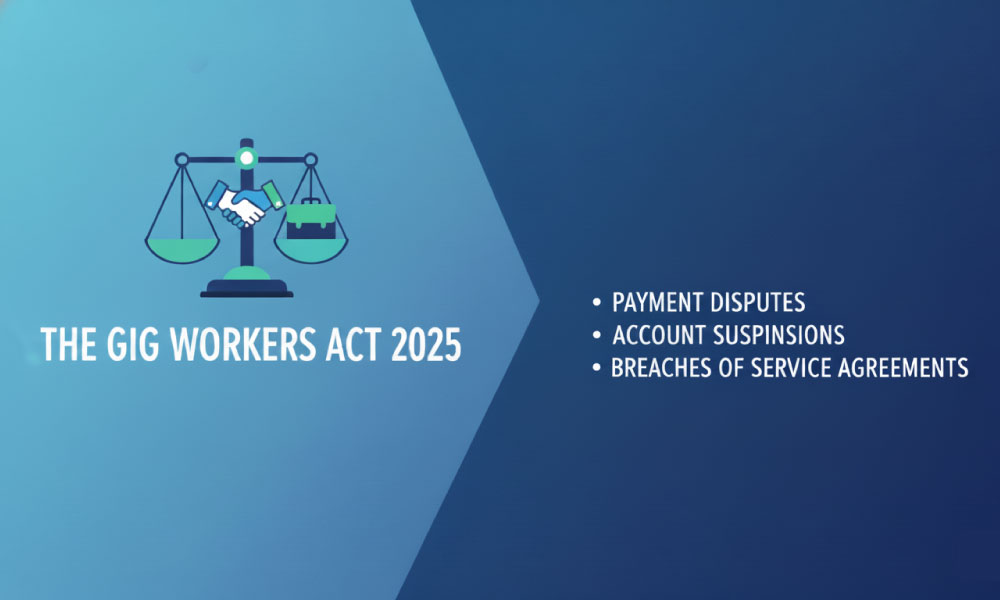
Complaints can be submitted through the Human Resources Ministry’s e-Aduan system or at any affiliated agency, making the process more accessible and structured.

Faster, More Transparent Dispute Resolution
Under the new framework, all complaints will be systematically reviewed, recorded, and forwarded to the appropriate agencies. Workers can also track the progress of their cases, with a targeted resolution timeline of 21 working days, an important step toward transparency and accountability.
If disputes remain unresolved through internal channels or mediation via the Industrial Relations Department, cases can be escalated to a newly established Gig Workers Tribunal. This independent body is designed to ensure fair and impartial resolutions, giving gig workers a stronger voice in disputes with platform operators.
A Seat at the Table: Gig Advisory Council
Another key feature of the Act is the formation of a 26-member Gig Advisory Council, set to begin operations on April 1. The council represents a diverse mix of stakeholders, including government representatives, gig workers, and contracting platforms.
Its responsibilities include:
- Advising on minimum income standards
- Developing sector-specific guidelines
- Facilitating dialogue on policy and industry challenges
This council is expected to play a crucial role in shaping fair and sustainable practices across different segments of the gig economy.

Strengthening Governance with SEGiM
The Act also establishes the Malaysian Gig Economy Commission (SEGiM), a statutory body tasked with overseeing and regulating the sector. SEGiM will be responsible for implementing policies, ensuring compliance, and safeguarding the welfare of gig workers.
This marks a shift toward more structured governance in an industry that has traditionally been decentralized and platform-driven.
While the Act lays a strong foundation, further details regarding enforcement mechanisms, specific regulations, and implementation timelines are expected to be released through additional guidelines and subsidiary legislation.
Final Thoughts
The Gig Workers Act 2025 represents a major milestone in Malaysia’s labor landscape. By formalizing protections and introducing institutional support, the government is not only addressing long-standing concerns but also setting the stage for a more sustainable gig economy.
For gig workers, this could mean greater security and recognition. For platforms and businesses, it signals the need to adapt to a more regulated environment. Ultimately, the success of this Act will depend on how effectively it is implemented, and how well it balances flexibility with fairness in the evolving world of work.